
The Antelope Valley wind drops sand in your garage every day, whether the door is open or not. A coated floor handles it fine, as long as you treat that sand like sandpaper and get it out before it gets walked in.
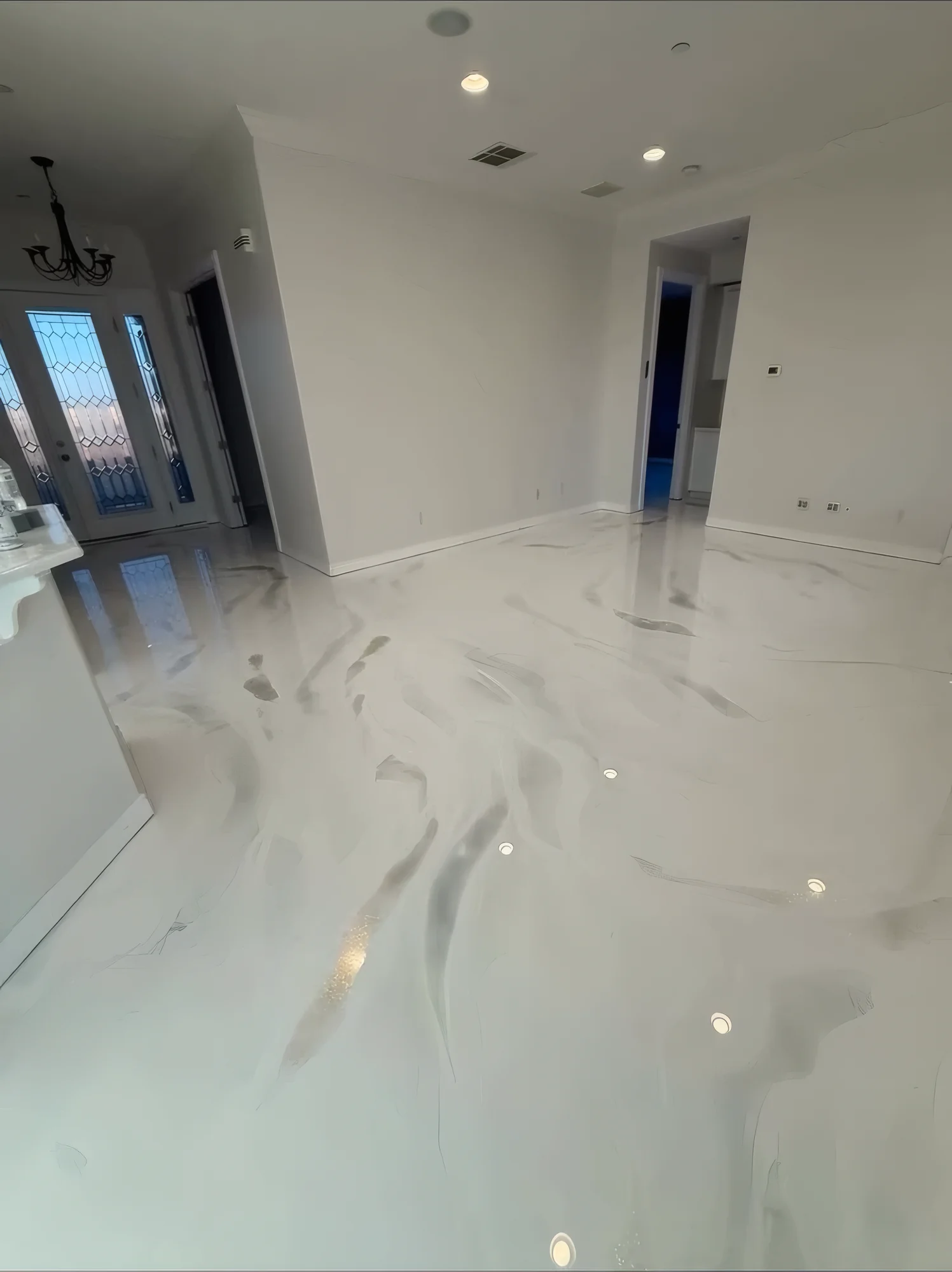
Sand does more damage than the car
People worry about tires, oil and dropped tools. Those matter. But the thing that dulls most coated floors out here is grit. Fine sand blows under the garage door, rides in on shoes and tires, and settles in a thin layer. Then every footstep and every rolling tire grinds it into the top coat like fine sandpaper.
It doesn’t happen in a week. It shows up after a year or two as a hazy, dull lane where you walk from the car to the door, while the corners still look new. On a dark metallic it shows sooner. On flake it hides longer, but it’s still happening. The good news is that most of it is avoidable with a broom and a habit.
A routine that actually works
Nothing fancy. The point is to get dry grit off before it gets ground in, and to wash only after the dry stuff is gone.
- Dust mop or soft push broom a couple of times a week, more after a windy day
- Hit the tire lanes and the walk path to the house door first, since that’s where grit does the most damage
- Vacuum or sweep out the corners and along the door seal once a week, where sand piles up
- Wet mop every couple of weeks, or when it looks dirty, using clean water and a mild cleaner
- Rinse the mop often so the floor gets cleaner instead of muddier
Mopping without leaving a film
Most people use too much soap. On a glossy floor, leftover soap dries into a dull film that grabs dust and makes the floor look dirty faster. A small amount of a pH neutral cleaner in a bucket of warm water is plenty. If the floor looks streaky after it dries, go over it again with plain water.
Some cleaners we’d keep off a coated floor. Vinegar and citrus cleaners are acidic and can dull the finish over time. Bleach and strong degreasers are rough on top coats. Oil soaps and anything that says it adds shine leave a coating of their own that gets slippery and holds dirt. And skip scrubbing pads with grit in them, which do exactly what the sand does.
For a deeper clean once or twice a year, a soft-bristle deck brush with a mild cleaner, followed by a good rinse and a squeegee out the door, brings most floors right back.
Oil, coolant and car stuff
A good top coat keeps oil and fluids on the surface instead of soaking into the concrete, which is half the reason people coat a garage. But it still helps to wipe drips up when you see them. Oil left sitting gets tracked around and makes the floor slick. Coolant, brake fluid and battery acid are harder on finishes, so those get cleaned the same day.
Paper towels or a rag for the spill, then a little cleaner and water. If something has dried on, let warm soapy water sit on it for a few minutes before you wipe. Don’t scrape at it with a metal blade.
Keeping sand outside in the first place
The less sand comes in, the less you clean. A good door seal along the bottom of the garage door makes a big difference out here, and a worn seal is one of the first things to check if sand piles up along the door. A coarse mat outside the house door catches grit off shoes before it hits the floor.
Inside mats are fine, but lift and clean under them. A mat that sits for months traps sand and moisture right against the top coat. On windy days, keeping the big door closed while you work is the single easiest thing you can do. We know that’s not always realistic in July.
When the top coat starts looking tired
Even a well kept floor can dull in the busiest lanes after a few years of desert grit. That’s usually just the top coat wearing. If the base and flake or metallic underneath are still bonded, the floor can often be cleaned, lightly sanded and given a fresh top coat. That brings back the gloss without starting over.
Julio can come take a look and tell you whether it needs a new top coat, a deeper repair, or just a better cleaning routine. For garages that get a lot of sun, he’ll likely bring up a polyaspartic top coat, which handles UV better than standard epoxy. You can read more about our full systems on the garage floor epoxy page and the metallic epoxy flooring page.
Questions
Can I use a pressure washer on my epoxy garage floor?
A gentle rinse is fine, but we’d skip blasting the floor at close range, especially at edges and cracks where water can get under the coating. A soft brush and a squeegee do the job without the risk. Sweep the dry sand out first either way.
What should I mop my epoxy floor with?
Warm water with a small amount of pH neutral cleaner. Skip vinegar, citrus, bleach, oil soaps and anything that promises extra shine. Rinse with plain water if it streaks.
Why does my floor look dull in some spots and shiny in others?
Usually it’s grit wearing the top coat in the walk paths, or soap film building up. Try a plain water rinse first. If the dull lanes stay dull, the top coat may need a refresh.
Does flake or metallic need more cleaning?
Metallic shows dust and footprints sooner, so it usually gets dust mopped more. Flake hides dirt better between cleanings. Both clean up the same way.
Julio looks at the floor before anything gets quoted. Call or text (818) 698-5011, email Supremeepoxyboyz26@gmail.com, or see the gallery first.